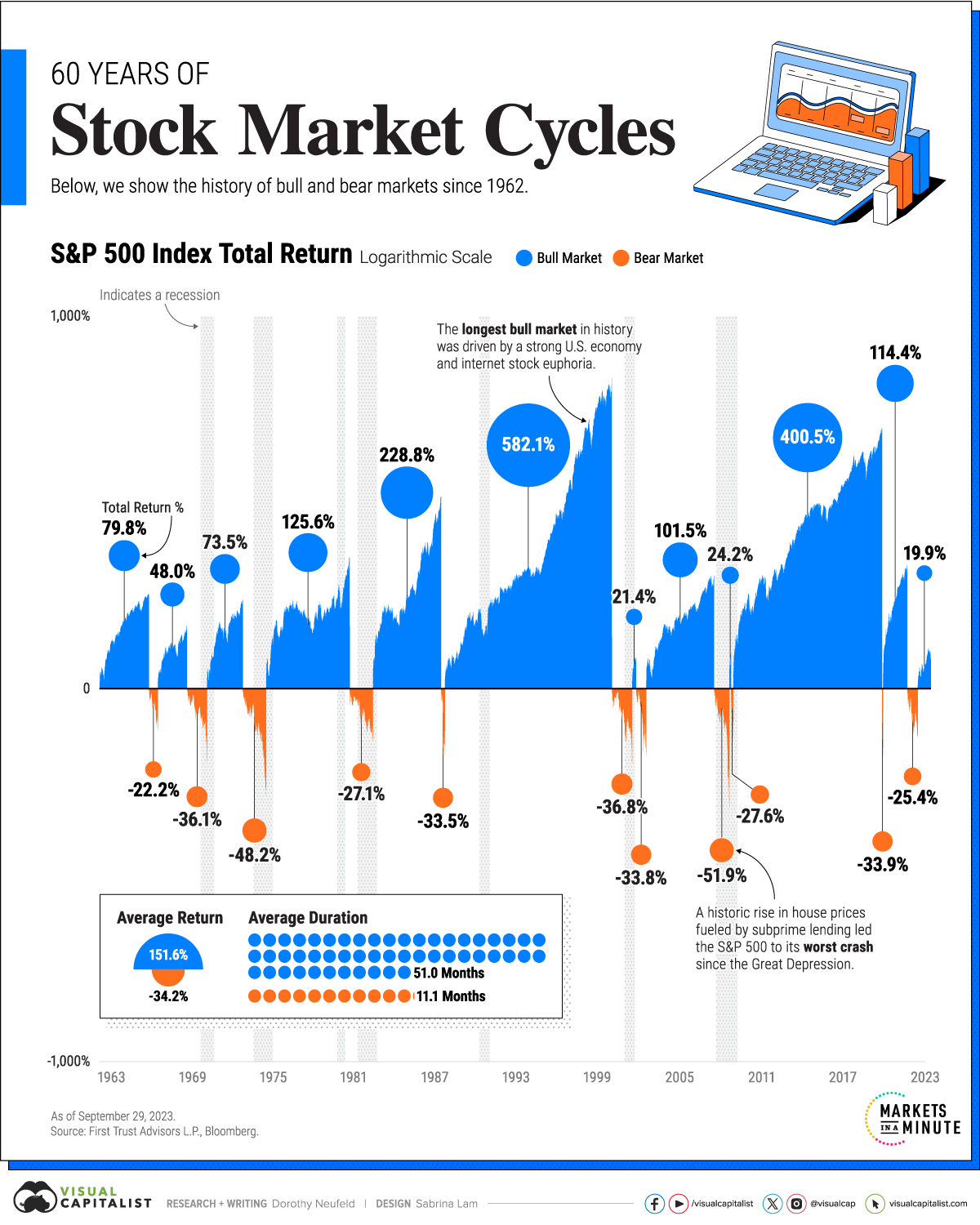

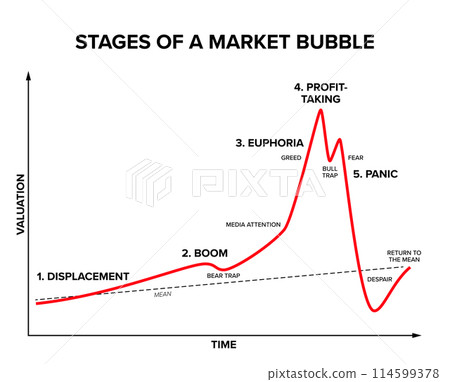
Markets never move in straight lines. They rise, fall, pause, confuse, recover—and repeat.
Still, every cycle catches most people off guard. When markets rise, confidence feels logical. When they fall, panic feels justified. In reality, nothing unusual is happening. This is how markets are designed to behave.
The real problem isn’t volatility. It’s misunderstanding market cycles.
This article doesn’t try to predict the next move. It explains the structure behind all moves—so you stop reacting emotionally and start seeing patterns clearly.
Market Cycles Are Human Psychology Wearing Numbers
Stock markets are not machines driven only by data. They are reflections of collective human behavior—scaled by capital.
Fear, hope, greed, relief, panic, confidence. Charts move because people move first.
Technology has changed how fast we trade, not how we feel. That’s why market cycles repeat decade after decade.
The Four Phases Every Market Cycle Goes Through
Every market cycle follows the same broad structure. Duration may change, intensity may vary, but the sequence remains consistent.
Phase 1: Accumulation – The Silent Beginning
This phase starts after damage has already been done. Markets have fallen. News remains negative. Trust is broken.
Prices stop falling rapidly, but nothing feels convincing enough to buy. Volumes are low.
- returns look slow
- confidence hasn’t returned
- narratives are unclear
Emotionally, accumulation feels uncomfortable.
Phase 2: Expansion – The Healthy Growth Phase
Economic data improves. Earnings stabilize. Markets trend upward with recoverable pullbacks.
Most real wealth is built in this phase.
Phase 3: Euphoria – The Dangerous Comfort Zone
Prices rise rapidly. Risk feels invisible.
- This time is different
- Valuations don’t matter
- Liquidity will support everything
This clarity is the illusion.
Phase 4: Contraction – The Reality Check
Growth slows. Fear replaces confidence.
- good companies fall with bad ones
- logic disappears
- emotional exhaustion dominates



A Closing Bell
Markets test behavior, not intelligence.
When you understand the rhythm, you stop reacting emotionally and start moving steadily.
That’s how wealth is actually built.